


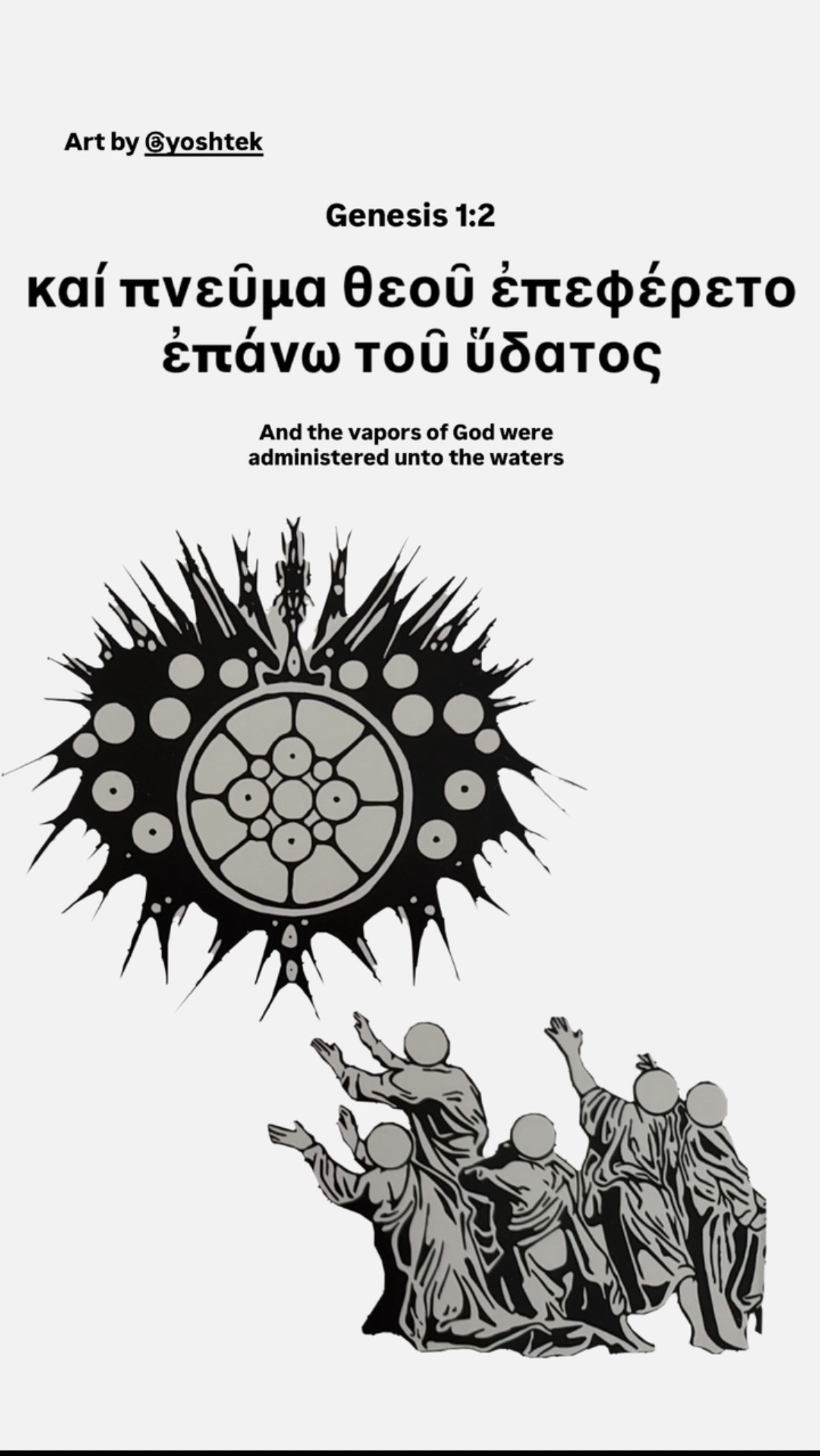
An artistic translation of Genesis 1:2 from the Septuagint Greek — and the philological work behind every word.
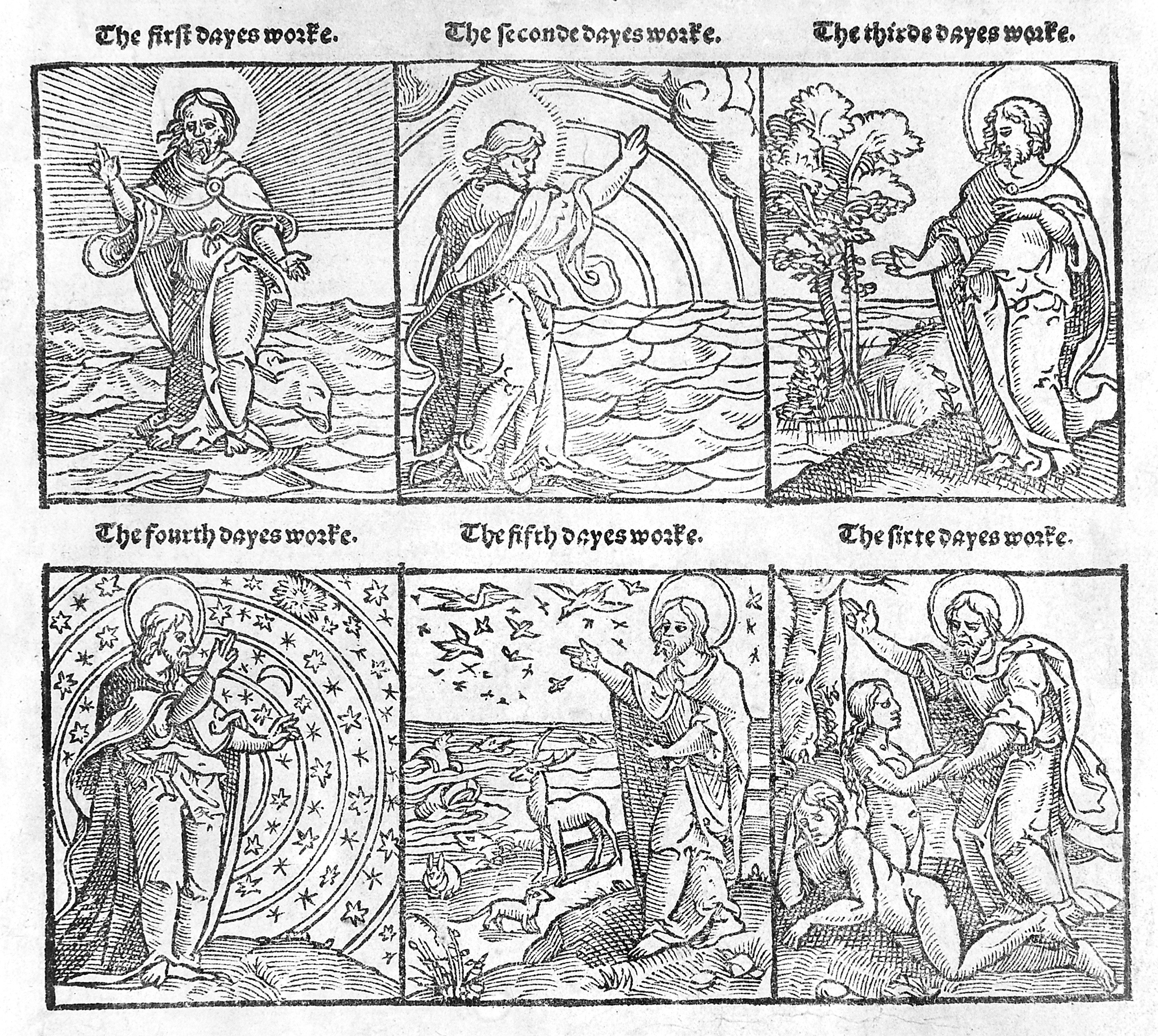
Most English Bibles render Genesis 1:2 something like: "And the Spirit of God moved upon the face of the waters." That reading is not wrong so much as flattened. It takes a verse written in the working vocabulary of Greek medicine and hands it back as weather — and along the way it adds a face that is not in the Greek at all.
Here is the line the Alexandrian translators actually produced:
ἡ δὲ γῆ ἦν ἀόρατος καὶ ἀκατασκεύαστος, καὶ σκότος ἐπάνω τῆς ἀβύσσου, καὶ πνεῦμα θεοῦ ἐπεφέρετο ἐπάνω τοῦ ὕδατος.
A note on method. I read the Greek as the text, not as a window onto some other one. Everything below is an argument from Greek words to Greek words — the lexicon, the Septuagint's own usage elsewhere, and the technical vocabulary the translator was demonstrably working in.
Because look at the first three words of the description. The earth was ἀόρατος καὶ ἀκατασκεύαστος — unseen and unconstructed. Not "formless and void." Ἀόρατος is a term of art; it is the word Plato uses for the invisible realm, the class of things not available to the eye. Ἀκατασκεύαστος is a builder's word — unequipped, not yet fitted out.
Whoever wrote this line was not groping for approximations. He was reaching, deliberately and in the very first clause, into technical Greek. That is the fact this whole essay rests on. If ἀόρατος is on purpose, the rest is on purpose too — and the rest belongs to the vocabulary of the physician and the pharmacist.
Which produces my translation:
"And the vapors of God were being administered unto the waters."
Not poetic license. Every word is doing philological work, and the lexicon will carry each one. What follows is the breakdown — through LSJ, the Septuagint's own usage, early Christian exegesis, Kabbalah, and Paracelsian alchemy as one continuous tradition of reading.
ἐπεφέρετο — The Language of Dosing, Not Drifting
The verb is ἐπεφέρετο: imperfect middle/passive of ἐπιφέρω. Standard translations soften it to "moved," "hovered," "was borne upon." They are entitled to. LSJ's passive senses do include motion — to be borne onwards, used by Herodotus of a raft carried downstream (2.96), and a harder sense, to rush upon, as when Xenophon has a great sea bearing down on a ship (Anabasis 5.8.20). Even the gentlest reading on the menu is not gentle: the passive already describes water in motion against something.
But the active senses are where it gets interesting. LSJ gives, under "lay on, apply":
ἐπιφέρω — lay on, apply, φάρμακον — Plato, Epistles 8.354b
This is the standard Greek idiom for applying a drug. Not for carrying one, not for owning one — for putting a pharmakon onto the thing that needs it. Plato uses this exact verb for it, and the lexicon files that use as its own numbered sense.
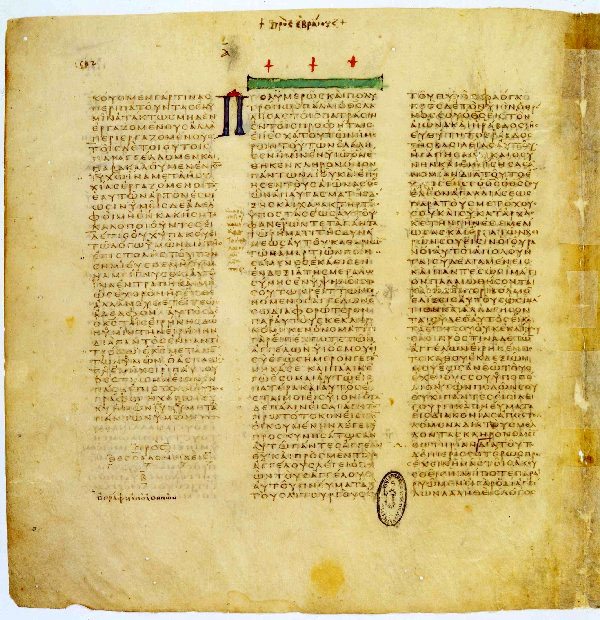
Then there is the tense, which nobody talks about. Ἐπεφέρετο is imperfect — continuous, iterative, unfinished action in past time. Not "was applied" once. "Was being applied," repeatedly, over a duration. Whatever is happening to the waters here, the Greek says it was happening on an ongoing basis before anything was made. That is not the grammar of a single gesture. It is the grammar of a course of treatment — and it is why my translation reads were being administered rather than were administered. The English has to hold the verb open the way the Greek does.
And the verse does not sit alone. Four verses later the same hand writes that a spring rose out of the earth καὶ ἐπότιζεν — and watered, gave drink to, the whole surface of the earth. Ποτίζω: to give drink. LSJ's citations for it include ὁ ἰατρὸς τὸ φάρμακον — the physician administering the medicine. The opening of Genesis in Greek is saturated with the vocabulary of getting a liquid into something that needs it.
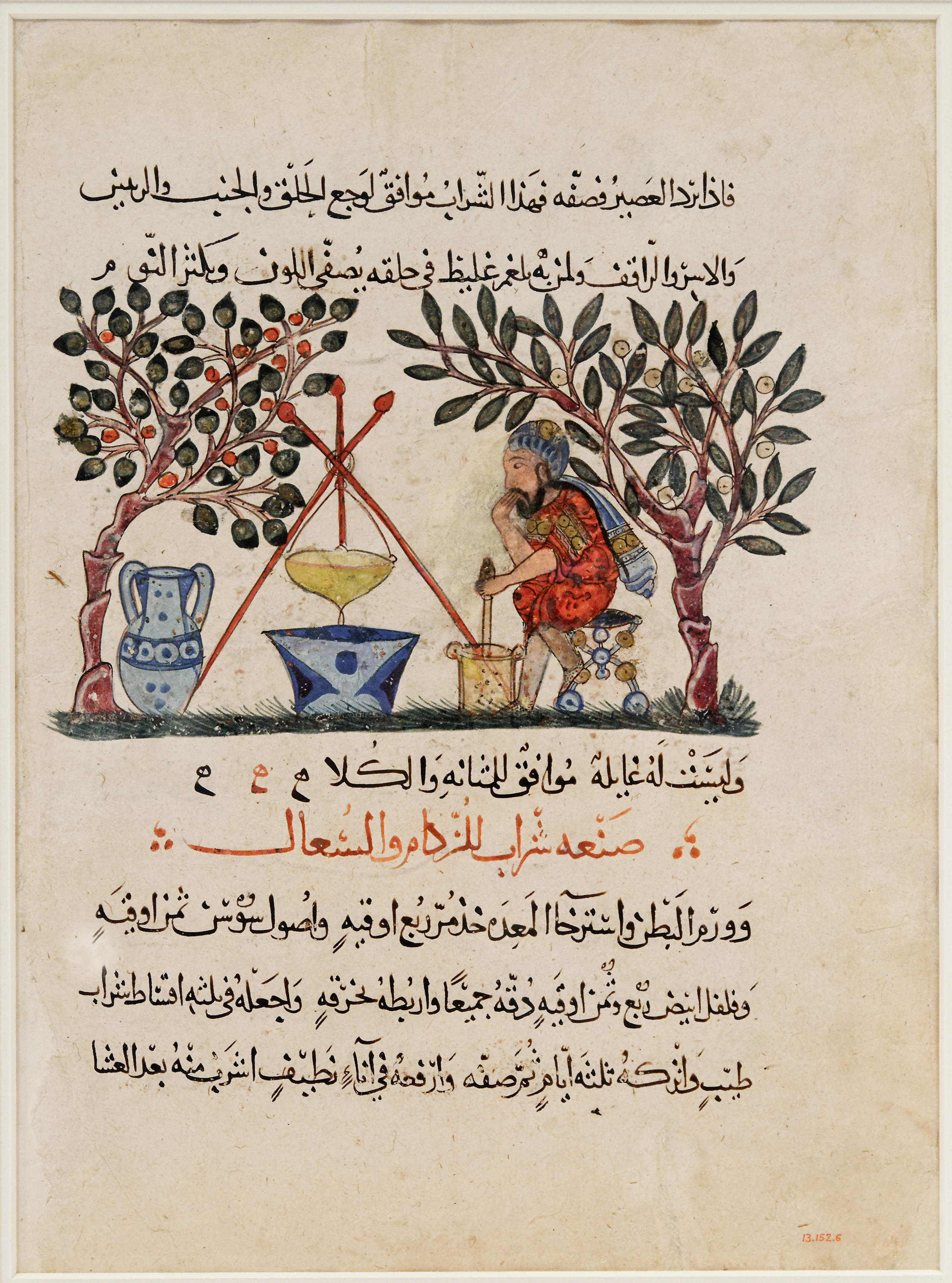
So when translators give us "was borne upon," they have chosen the mildest item available. The Spirit is not idling above a surface. It is being administered — a remedy applied to a wound, and applied continuously. The cosmic physician dosing the formless waters.
ἀτμός — Vapor, Not Metaphor
The next objection writes itself: the verse says πνεῦμα, spirit. Where do "vapors" come from?
They come from πνεῦμα — because πνεῦμα is not primarily a theological word. It is a physiological one. Before it was Spirit it was blast, wind, breath, and in the Greek medical writers it is the technical term for the vital air that moves through the body and animates it. An ancient reader meeting πνεῦμα in a Greek text met a substance, not a mood. Rendering it "vapors" restores the material register the word carried before centuries of English usage bleached it out.
The Greek word that holds that register most nakedly is ἀτμός — and it is worth seeing how deep its file goes. LSJ has it as steam, vapor, exhalation; specifically Ἄραψ ἀτμός, Arabian vapor, meaning the smoke of incense. Its close variant ἀτμίς, moist vapor, runs through Aristotle's Meteorology, appears in the alchemical papyri as the sublimate — the colored deposit left when a substance is driven upward by heat — and turns up in Galen, quoting Crito, as a poultice. Vapor as weather, vapor as laboratory product, vapor as applied medicine, all under one headword.
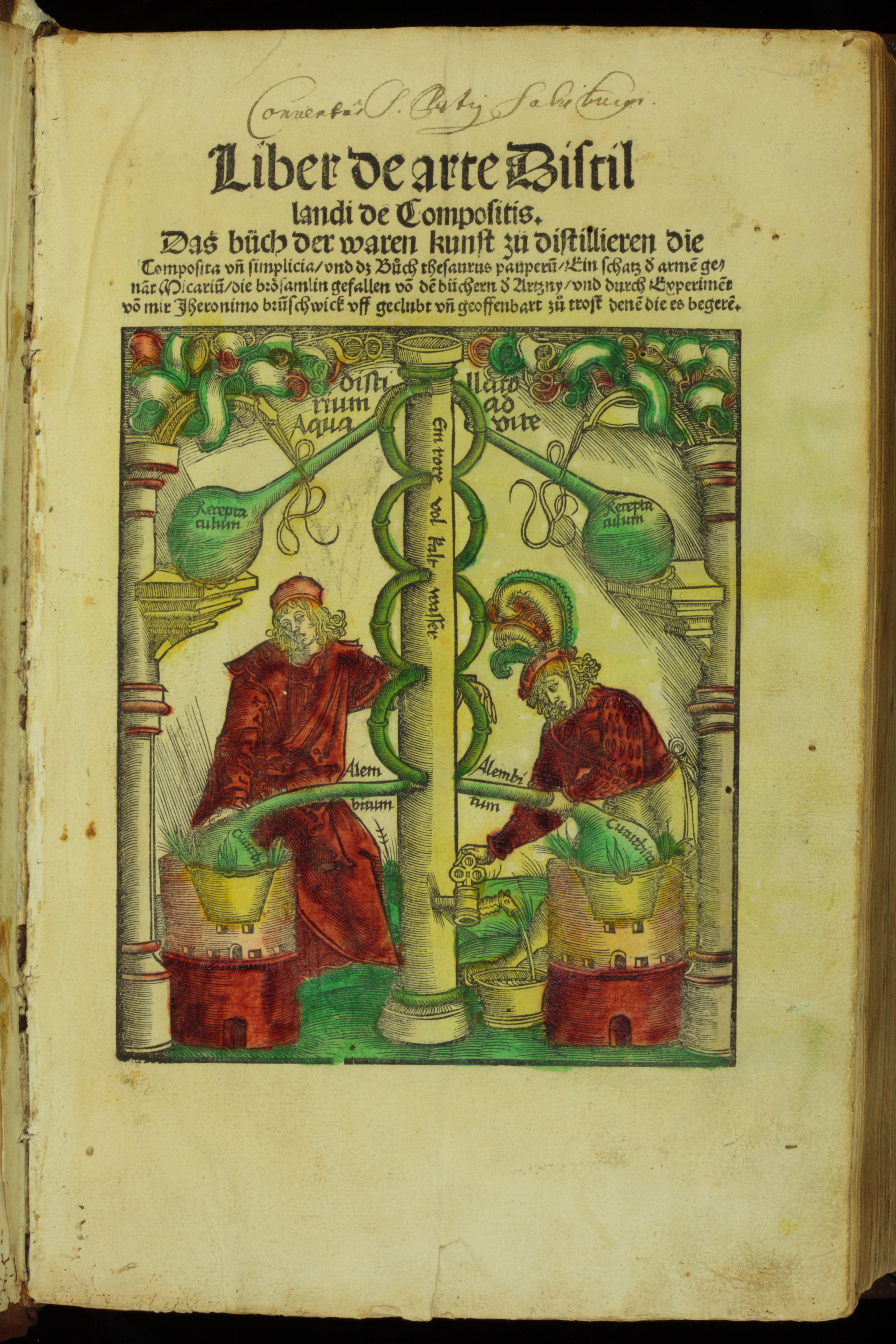
And the Septuagint uses it of God directly. Wisdom of Solomon 7:25, on Wisdom herself:
ἀτμὶς γάρ ἐστι τῆς τοῦ Θεοῦ δυνάμεως — "for she is a vapor of the power of God."
Read the next line and it gets better. Verse 26 calls her ἀπαύγασμα, an effulgence, a radiance. Now open Hesychius, the ancient Greek lexicographer, at ἀτμίς: he glosses it with σπινθήρ and ἀπαύγασμα — spark and radiance. The author of Wisdom set side by side, in consecutive lines, the two words a Greek lexicographer treats as synonyms. Vapor and radiance were one idea, and that idea was used of divine power inside the Septuagint's own pages.
Elsewhere in the corpus ἀτμίς is the vapor of a furnace (Genesis 19:28) and the ἀτμίδα καπνοῦ, the vapor of smoke, in Joel — the verse quoted at Pentecost in the same breath as the outpouring of the πνεῦμα. Spirit and vapor were never competing translations. They were the same vocabulary.
Hippolytus shows the reading was already live in the second century. In the Refutatio Omnium Haeresium he quotes this exact verse and names the Spirit πνεῦμα φωτεινόν — a luminous vapor — held within the dark primordial water. At VI.9 he records the Simonian reading of the same line: the power borne over the water is the one "which contains all things in itself" and which "reduces all things into order." An operation performed on the water, not an atmosphere above it. The Naassenes of Book V, working the same territory, called water the "moist substance of generation." In this register vapor, pneuma, and the working principle of the cosmos were interchangeable terms.
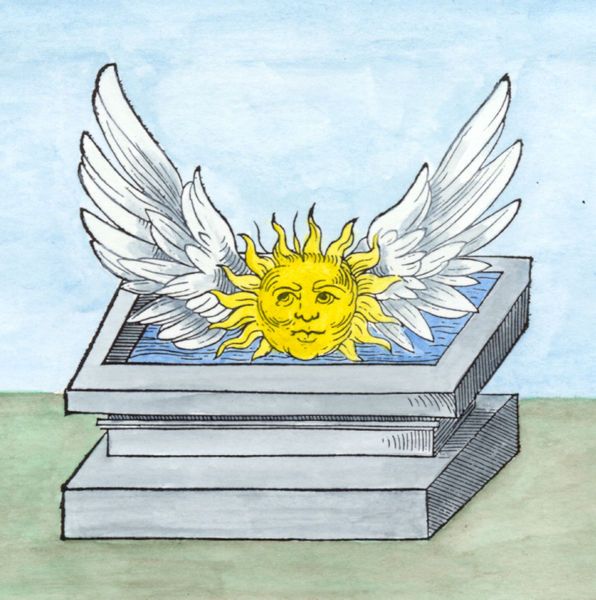
ἐπάνω — In the Presence Of, Not Just Above
Now the preposition, and the most quietly decisive evidence in the essay.
ἐπάνω is routinely flattened to "above." It does mean that. But LSJ carries a further sense, third in its first group: in front of, in the presence of, with the genitive — and the citations LSJ gives for it are from the Septuagint. The first is Genesis 18:2.
Go and look at it. Abraham lifts his eyes and three men εἱστήκεισαν ἐπάνω αὐτοῦ — and he immediately runs out to meet them. Nobody has ever translated that "three men were standing above him." They were standing before him, close enough to greet. Same book, same hand, same preposition, and the sense is presence, not altitude.
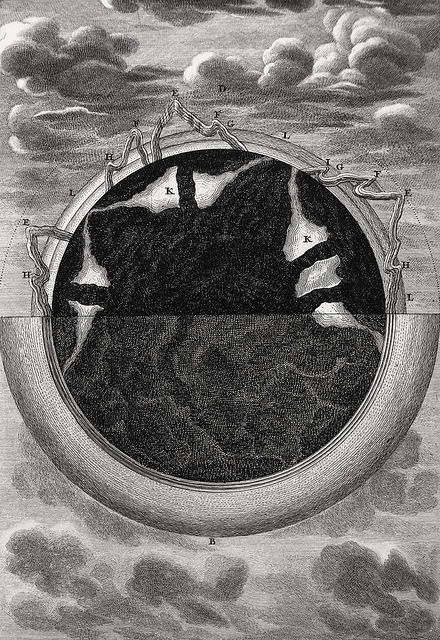
Which brings us to the word that isn't here. Every familiar English rendering gives you a face — "upon the face of the waters." There is no face in this verse. The Greek reads simply ἐπάνω τοῦ ὕδατος, and my translation does not carry one either. That is deliberate, and the absence is evidence.
Because the word was available. Πρόσωπον, the ordinary Greek for a face, turns up four verses later at Genesis 2:6 — πᾶν τὸ πρόσωπον τῆς γῆς, the whole face of the earth. So at 1:2, with that idiom in hand and about to be used, it was passed over in favor of ἐπάνω. Two adjacent verses, two different constructions, one of them chosen against the other.
And the two are not interchangeable. Πρόσωπον is built from πρός (toward) + ὤψ (eye) — a thing turned toward you, a countenance, something you look at. That is the right word for a landscape being irrigated and watched. Ἐπάνω is not a picture at all. It is a position — the posture of one thing brought up to another and held there, in its presence. It is the language of application, not of scenery.
Which is exactly the word you reach for if the sentence in your head is about a pharmakon meeting the thing it is meant to act on. The Greek is not painting a surface. It is describing a placement.

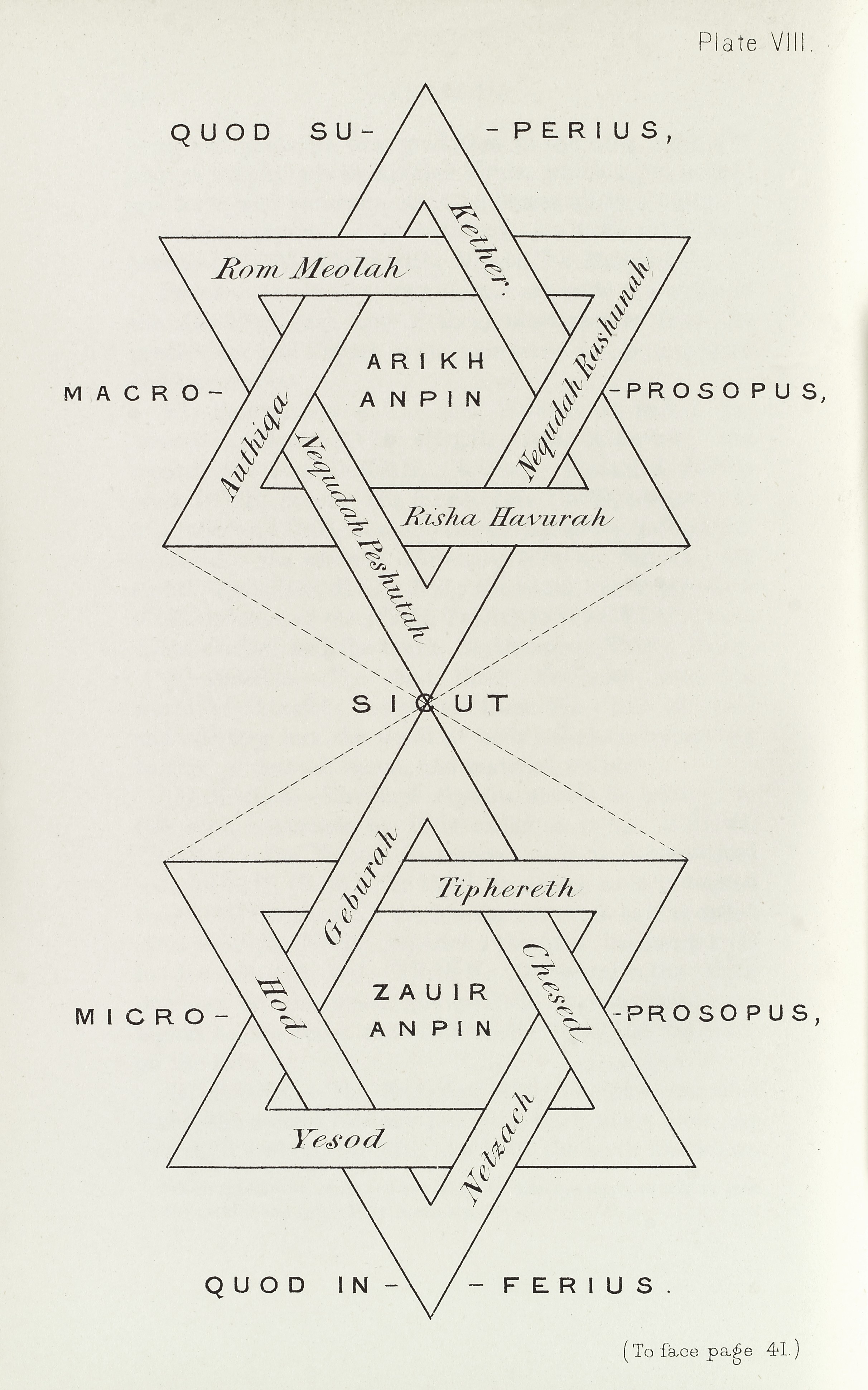
Macroprosopus and Microprosopus — Two Countenances Beholding
Once you are reading 1:2 as a meeting rather than a hovering, the later tradition stops looking decorative and starts looking like commentary.
The Kabbalistic reading (the Zohar, in Knorr von Rosenroth's Latin and Mathers' English as The Kabbalah Unveiled) works the primordial waters through two figures: Macroprosopus and Microprosopus, the Vast Countenance and the Lesser — Arikh Anpin and Zauir Anpin. Both names are built on πρόσωπον. And the operative teaching is not that the two exist, but that nothing flows until they turn and behold one another. Influence, in that system, is a function of two presences brought into mutual regard.
Which is the same structure ἐπάνω encodes without needing a countenance to say it. Not a thing suspended over another thing. Two presences brought up to each other, at which point something passes between them.
Paracelsus and the Turba — Chaos as Humid Vapor
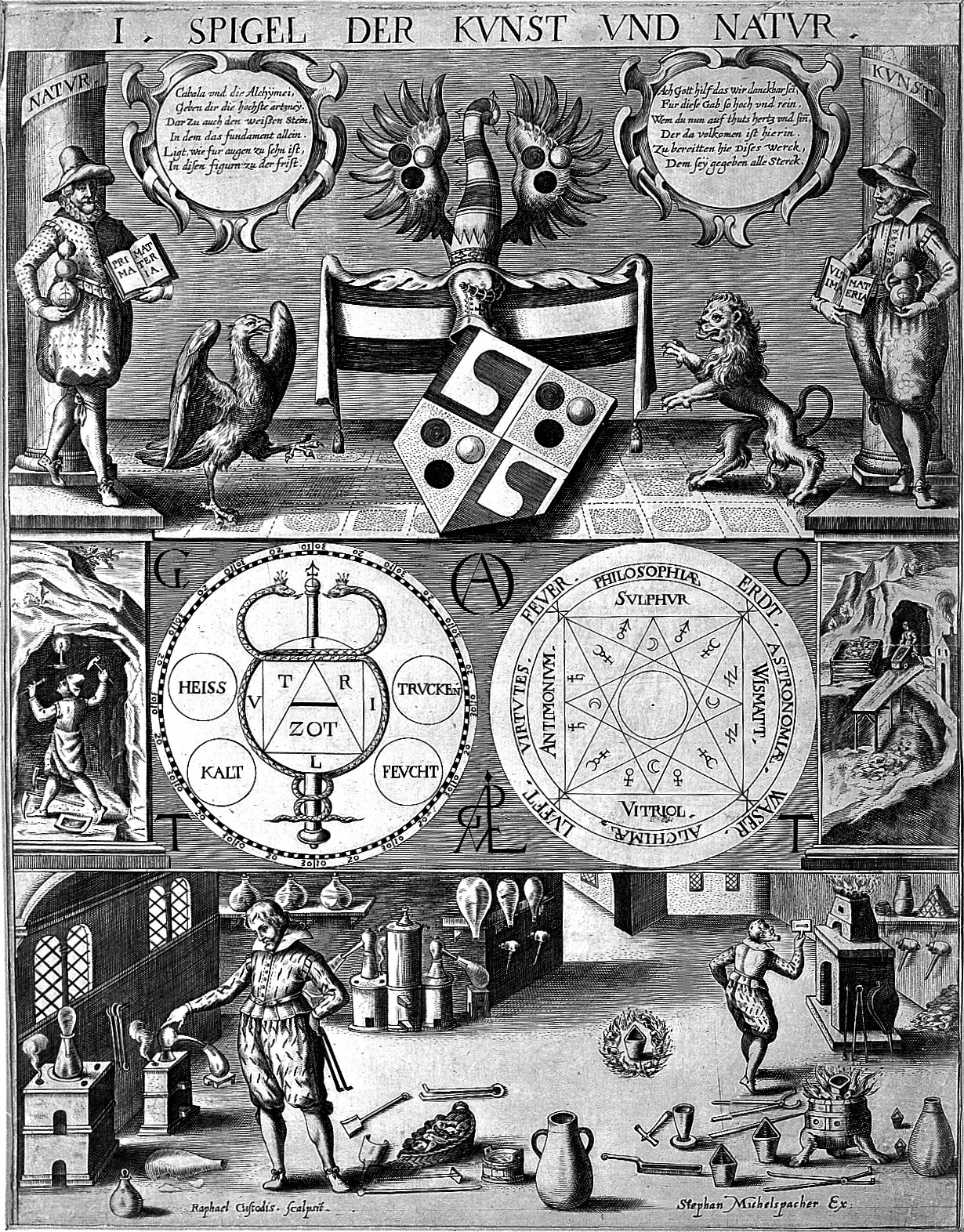
Paracelsus closes the loop, and he closes it in a laboratory. Chaos, he argued, could be nothing but a humid vapor — water being the matrix from which all created substance is drawn. Which means a vapor standing over a body of water, acting on it continuously, is not a mystery in his system. It has a name. It is a distillation: heat applied to a liquid, the subtle part rising, the rising part carrying the virtue. The Turba Philosophorum arrives at the same place by the same road, insisting everything begins in water.
This is why the verse mattered so much to the alchemists. Read with LSJ open, Genesis 1:2 describes the first operation: a vapor, administered, continuously, to a body of water, in its presence. Every practitioner from Alexandria to Basel would have recognized that as a description of their own bench.


Stack It Up
- ἀόρατος καὶ ἀκατασκεύαστος — "unseen and unconstructed." Technical Greek in the first clause. The hand is showing.
- ἐπιφέρω — to lay on, to apply; LSJ's cited object is φάρμακον (Plato, Ep. 8.354b). To administer a drug.
- ἐπεφέρετο — imperfect. Not one application. A continuous one — hence were being administered.
- πνεῦμα / ἀτμός — breath, blast, vapor; the vital air of Greek medicine, the sublimate of the alchemical papyri, the poultice in Galen. Hippolytus calls it πνεῦμα φωτεινόν, luminous vapor; ἀτμίς is what Wisdom 7:25 calls the power of God.
- ἐπάνω — not only "above" but in the presence of, before (LSJ, citing Genesis 18:2). A placement, not a picture.
- πρόσωπον — the word for "face," available and used four verses later at 2:6, and not used here. The face in the English translations is not in the Greek, and it is not in mine.
Each word licenses a piece of the translation. None of it is invented, and nothing has been added that the Greek does not carry.
The Translation, Whole
"And the vapors of God were being administered unto the waters."
— Genesis 1:2, read through pharmacology, alchemy, and Kabbalah as one continuous tradition.
The claim is narrow, and I want to keep it that way. I am not saying a recipe is encoded in the first page of Genesis. I am saying this text belongs to a world where medicine, philosophy and the pharmacist's bench shared a single technical vocabulary, that it demonstrably reaches into that vocabulary in its opening clause, and that the rest of the verse is built from the same stock of words — a vapor, applied, continuously, in the presence of the deep.
Read it that way and the first act of creation is not a mood over a lake. It is a treatment. Something unformed, and something administered to it until it wasn't.
Sources
- Septuagint (LXX), Genesis 1:2 — ἡ δὲ γῆ ἦν ἀόρατος καὶ ἀκατασκεύαστος, καὶ σκότος ἐπάνω τῆς ἀβύσσου, καὶ πνεῦμα θεοῦ ἐπεφέρετο ἐπάνω τοῦ ὕδατος
- Septuagint, Genesis 2:6 (πᾶν τὸ πρόσωπον τῆς γῆς); Genesis 18:2 (ἐπάνω αὐτοῦ); Genesis 19:28; Joel 3:3 [2:30]
- Wisdom of Solomon 7:25–26 — ἀτμὶς γάρ ἐστι τῆς τοῦ Θεοῦ δυνάμεως… ἀπαύγασμα γάρ ἐστι φωτὸς ἀϊδίου
- A Greek-English Lexicon (LSJ), Liddell & Scott — s.vv. ἐπιφέρω, ἐπάνω, ἀτμός, ἀτμίς, ποτίζω, πρόσωπον
- Plato, Epistles 8.354b — LSJ's citation for φάρμακον ἐπιφέρειν
- Herodotus 2.96; Xenophon, Anabasis 5.8.20 — passive senses of ἐπιφέρω
- Aristotle, Meteorology; Galen 13.879 citing Crito (ἀτμίς as poultice); Hesychius, Lexicon, s.v. ἀτμίς
- Hippolytus, Refutatio Omnium Haeresium — πνεῦμα φωτεινόν on Genesis 1:2; Book V (Naassenes) and VI.9 (Simon Magus)
- Christian Knorr von Rosenroth / S. L. MacGregor Mathers, The Kabbalah Unveiled
- Paracelsus, alchemical and medical treatises; Turba Philosophorum
Hero artwork by @yoshtek. Historical illustrations via Wikimedia Commons; individual credits in figure captions above.


.jpg)



_of_an_original_(350-340_BCE)._Altes_Museum,_Berlin.jpg)

.jpg)


