


In the middle of a winter in the late 140s AD, a famous Greek orator walked out of the city of Smyrna, down to the river that runs in front of it, took off his clothes in a hard north wind, and threw himself into the water.
The pebbles on the bank had frozen into one continuous sheet of ice. A crowd had gathered on the bridge. Physicians were among them — some friends, some there, in his own words, for the purposes of investigation. One of them, a doctor named Heracleon, admitted the next day that he had come expecting to watch the man's spine seize.
He was wrong. The orator swam. He splashed water over himself. He came out with his skin flushed rose, and a shout went up from the bridge.
His name was Publius Aelius Aristides, and the reason he did it was that a god had told him to in a dream.

That photograph is from a book called The Seven Churches of Asia, published in 1869 by a photographer documenting the seven cities addressed in the Book of Revelation. He went to Smyrna and photographed its river because John of Patmos wrote a letter to Smyrna. He had no particular reason to care that seventeen centuries earlier a sick rhetorician had been ordered into that same water by Asclepius.
Both men were writing about the same god. Only one of them thought he was the devil. We will get to that.
I. Six Books, and How They Almost Didn't Exist
The primary source is the Ἱεροὶ Λόγοι — the Hieroi Logoi, the Sacred Tales. Six books. There is nothing else like them from antiquity.
What makes them singular is not the miracles. Miracle records survive in quantity — the cure inscriptions at Epidaurus are a whole genre. What survives nowhere else is the inside of the experience: a sustained, first-person, self-aware account of what it was like to live inside a divine medical relationship for nearly thirty years. Part spiritual autobiography, part medical case history, part literary monument. Not in Galen. Not in Pausanias. Not on the temple walls.
And it very nearly wasn't written. Aristides says so himself, and the admission is the most human thing in the corpus. He had no intention of writing any of it down. He doubted he would live long enough. Then, having survived, he decided too much time had passed to reconstruct it accurately. He made excuses — to his friends, and to the god. Only after many years did dream visions compel him to bring it to light.
The notes he was working from amounted, by his own estimate, to no fewer than thirty thousand lines. Most were lost or scattered during the chaos of his household in those years. What survives in six books is a retrospective reconstruction, assembled from memory and fragments, in whatever order the god directed — and he tells you that, openly, which is more than most ancient authors will do.
Now here is the part I keep coming back to.
Before Asclepius prescribed a single treatment — before any drug, any diet, any bath — the first command the god gave him was to write his dreams down.
Aristides states plainly that the god prescribed the keeping of a dream journal as the first of his injunctions (Sacred Tales II; Behr, p. 291). Not a remedy. A record. The intake protocol of the oldest documented mind-body medicine in the West was keep a log.
He kept it even when he was too weak to hold a stylus — he dictated. For long stretches he recorded only the raw dreams and not their context or their outcomes, partly from physical weakness and partly, he says, because he never expected the god's providence to run this long.
II. The Institution: Sleeping for a Prescription
None of this was fringe. It was infrastructure.
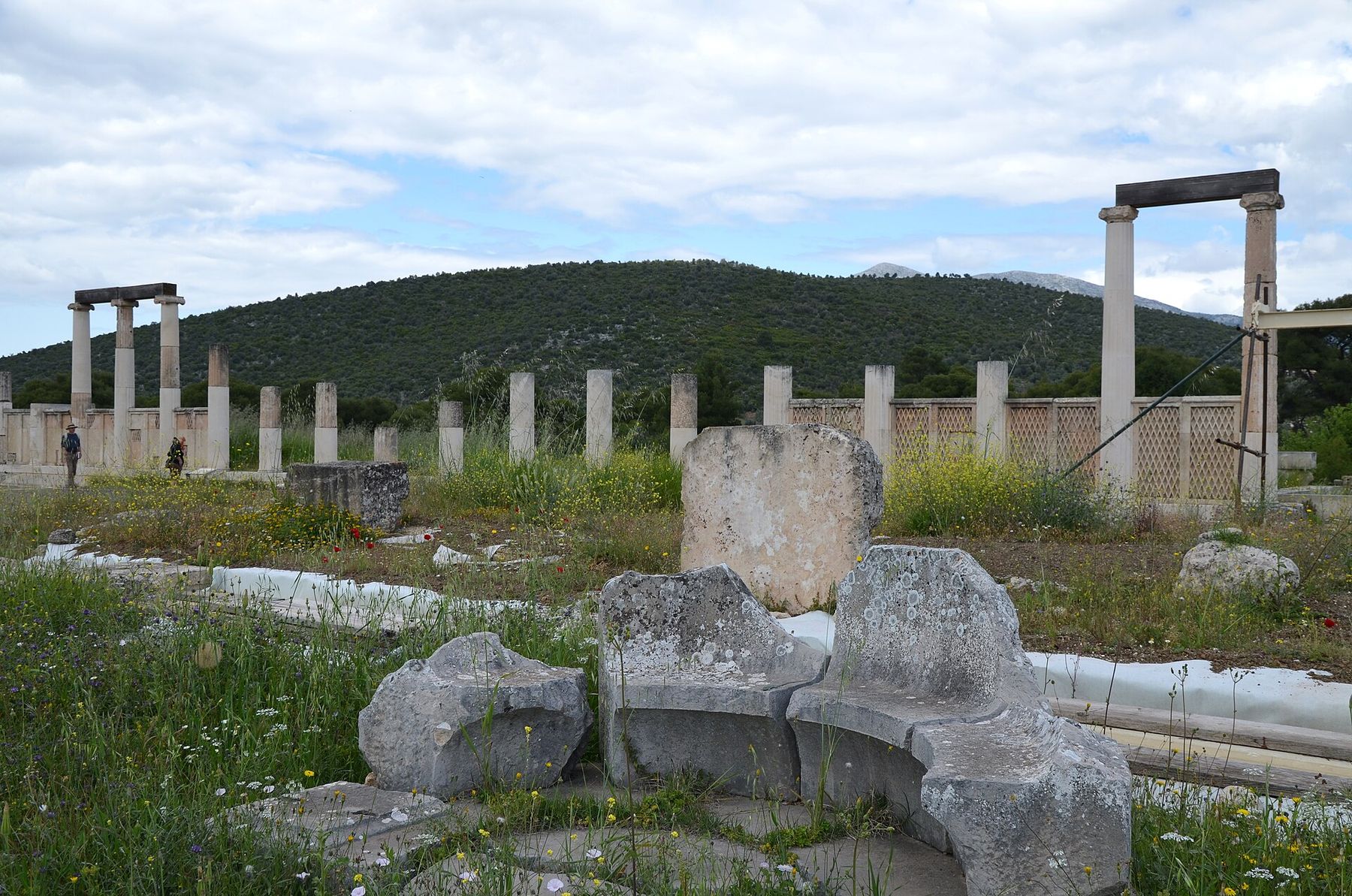
The practice is called incubation — in Greek ἐγκοίμησις (enkoimēsis), "sleeping-in." Supplicants travelled to a sanctuary of Asclepius — Epidaurus, Pergamon, Cos, Smyrna — purified themselves, and slept in the sacred precinct waiting for a healing dream. The god appeared. He either cured you outright or handed you a prescription. You woke up and executed it.
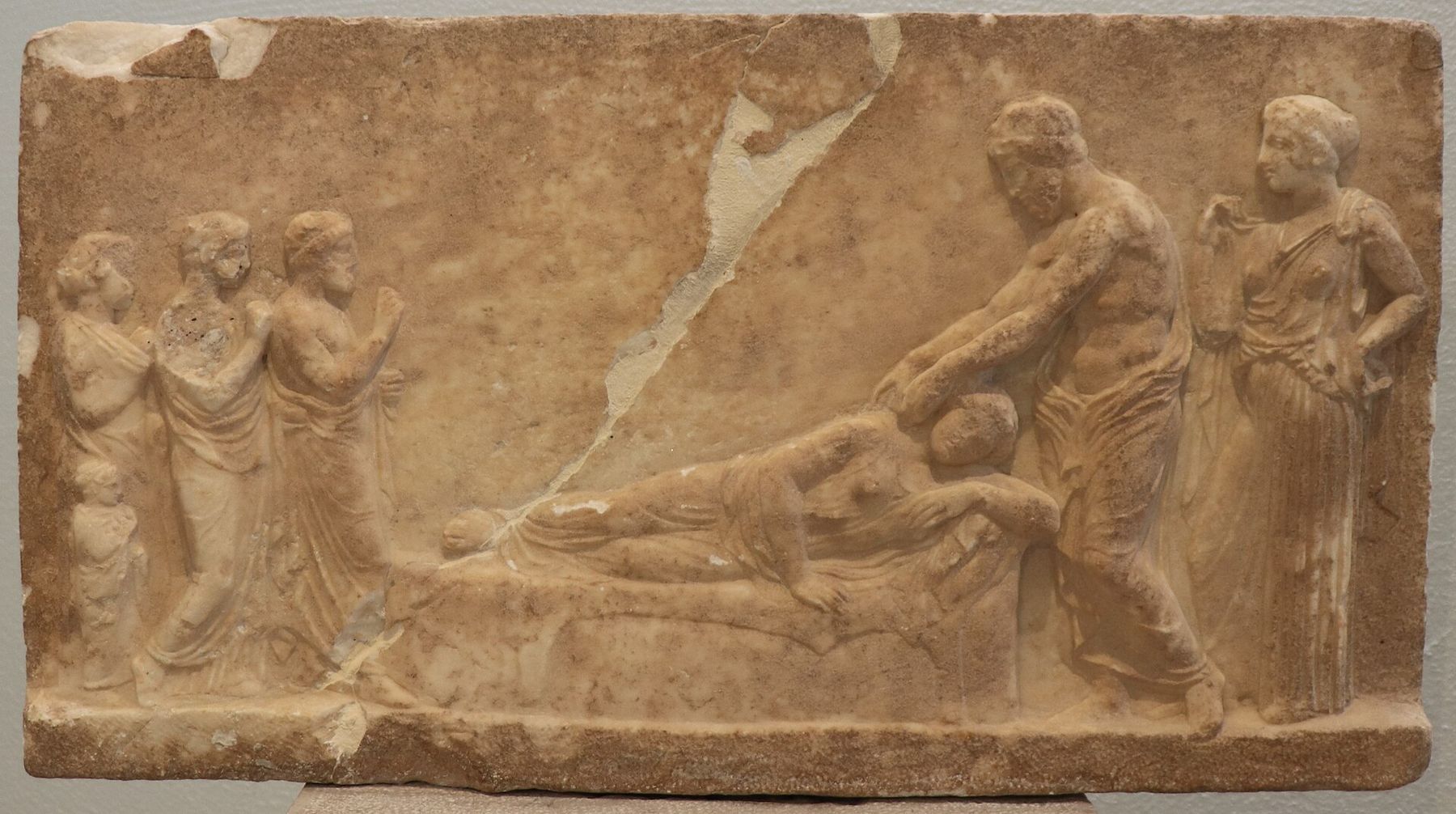
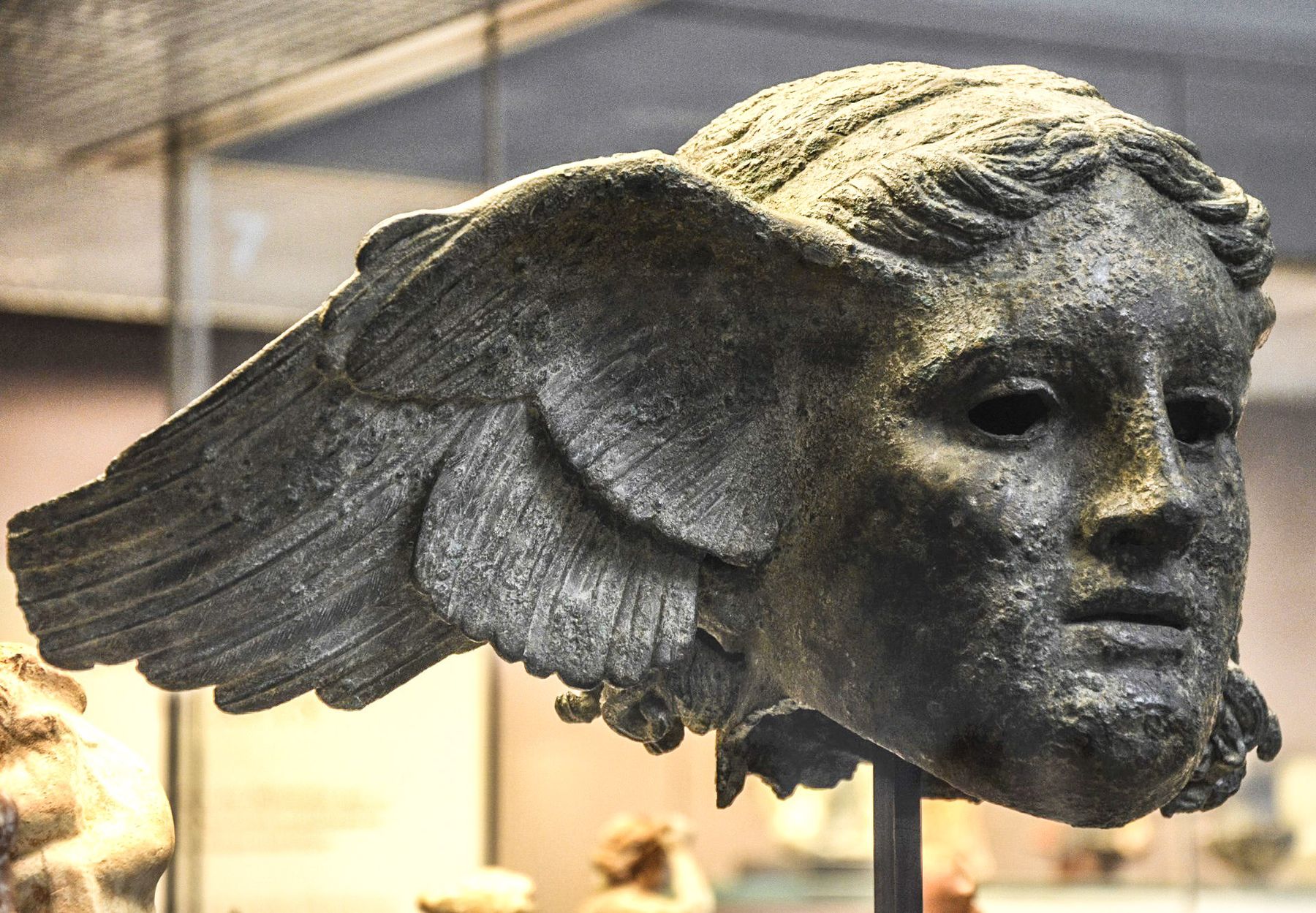
This was taken seriously enough to be built into the architecture. Pausanias, describing the Asclepieion at Sicyon, records a building with two rooms; in the outer one lay a figure of Hypnos, Sleep, of which by his day nothing survived but the head. Nearby stood Hypnos together with Oneiros — Dream — shown lulling a lion to sleep (Description of Greece 2.10.2).
Read that again. They gave Sleep and Dream their own statues, in their own chamber, inside a hospital. We build a waiting room. They built a shrine to the state of consciousness the medicine was delivered through.
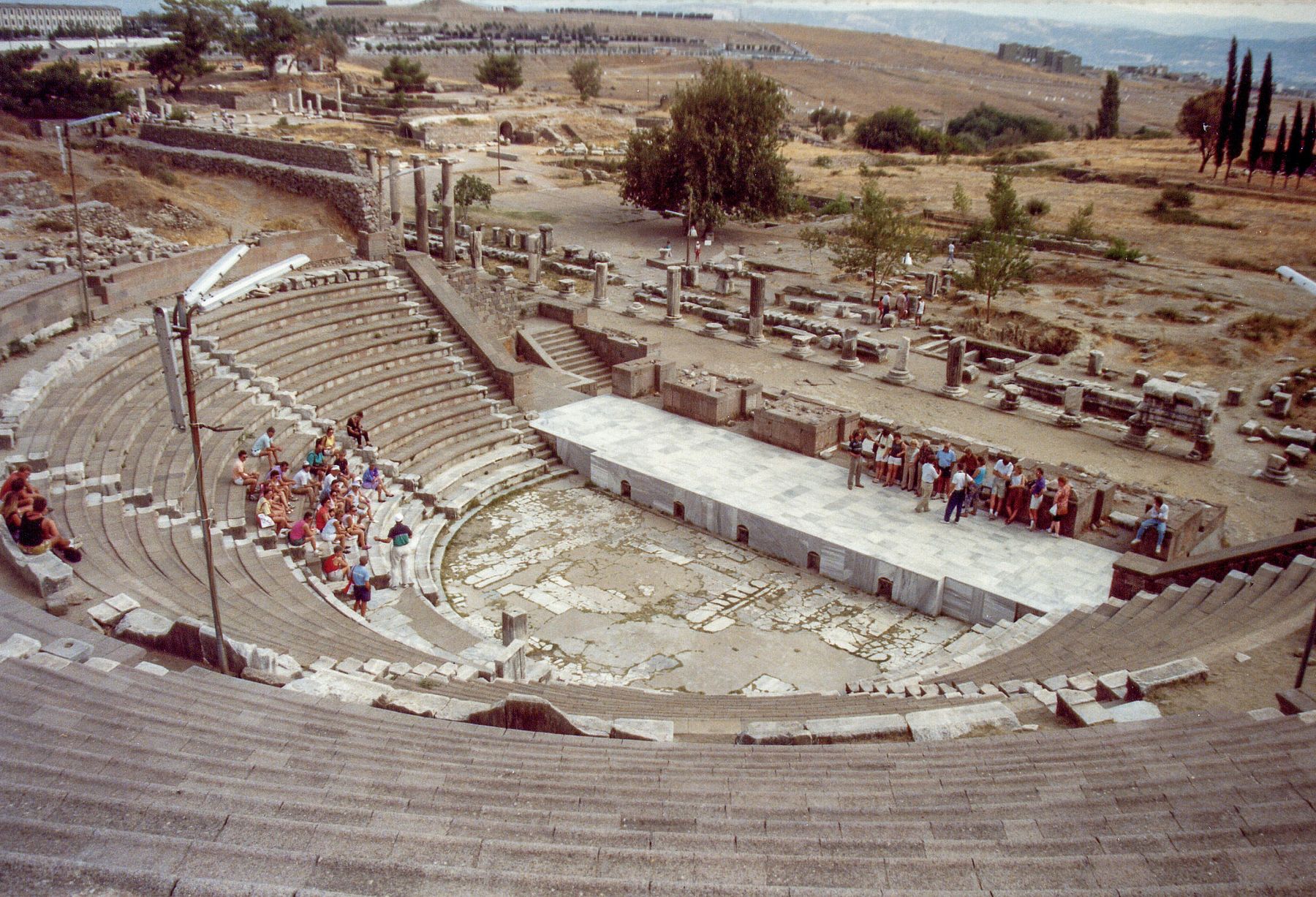
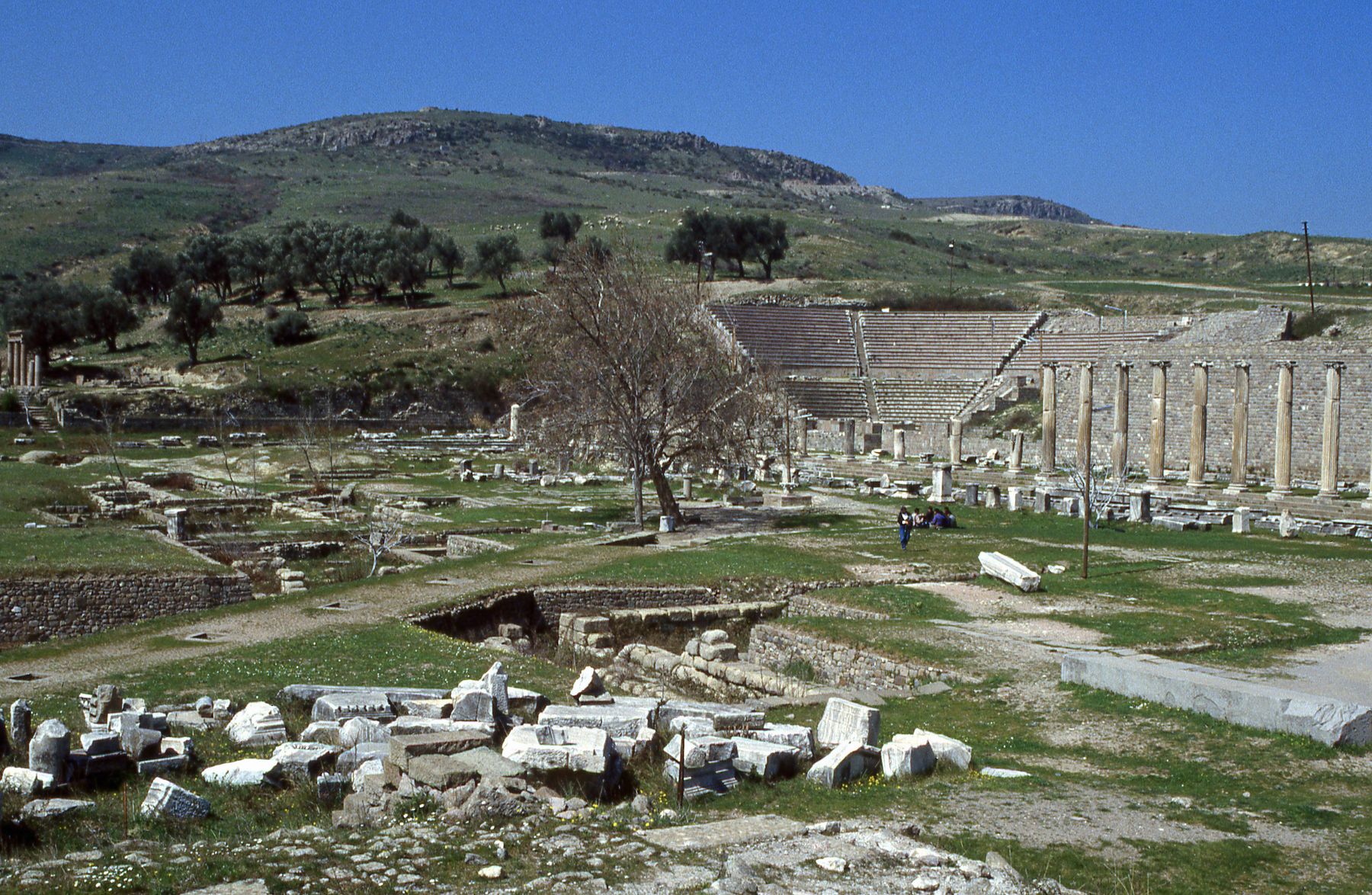
Aristides was resident at the Pergamene Asclepieion for years at a stretch. He lived alongside the neokoros, the temple warden, sharing dreams communally with him and with the other devotees. The prescriptions came nightly. He compared notes with the people around him and found that dreams sometimes overlapped or confirmed one another. Friends, physicians and temple staff formed an interpretive community around the revelations.
That is not a lone mystic in a cave. That is peer review, in a sanctuary, on dream data.
And the treatments the god handed out were not gentle. The recorded categories include fasting, unusual diets, bloodletting, enemas, induced vomiting, and either abstaining from bathing altogether or bathing in freezing rivers. Asclepius was not running a spa.
One more thing about Pergamon, because it matters for what the god was actually prescribing. Aristides thanks Asclepius not only for keeping him alive but for his rhetorical powers (Sacred Tales IV; Behr, p. 327). The god assigned him compositions — hymns to Athena, to Dionysus, to Apollo — and set him rhetorical problems to solve while he slept. A contemporary critic told him outright that he believed the god had sent the illness precisely so that Aristides would grow as an orator through divine companionship. Aristides does not reject this. In his hymn to Asclepius he counts himself among those who have lived many lives under the god rather than the one they were given, and says he would not trade it for all ordinary human happiness.
III. The Prescription
The dream that produced the plunge came at Smyrna, and Aristides reports it with unusual care, saying he would place a high premium on being able to recount exactly each particular of it.
The figure at his bedside was doubled. It was Asclepius and Apollo at once — Apollo both of Claros and the one called Kalliteknos at Pergamon, "he of the beautiful children," the epithet of the father of Asclepius. The god stood by the bed, extended his fingers, and counted out time: ten years from me and three from Sarapis — and the three and the ten showed simultaneously in the position of the fingers as seventeen.
Then the god said something that Aristides, a man soaked in Homer, would have recognised instantly. He said that this was not a dream but a waking state — and that Aristides would know it.
That is a quotation. It is Odyssey 19.547, the eagle speaking to Penelope: οὐκ ὄναρ, ἀλλ' ὕπαρ ἐσθλόν — "not a dream, but a waking vision, and a good one, that shall be fulfilled for you."
The god quoted Homer at him to certify that the vision was real. The credential for a second-century epiphany was a line of eighth-century poetry.
And then the order: go down to the river that flows before the city, and bathe. And let a young boy lead the way. The god pointed the boy out explicitly (Sacred Tales II.18).
The river before Smyrna is the Meles. Which is worth pausing on, because the Meles is not just any river. Smyrna claimed Homer as its own and claimed he was born on that bank — son of the river Meles and the nymph Kretheis, and called at first Melesigenes, "Meles-born."
So: a god quotes the Odyssey to prove he is real, and then sends the patient into the river that the poet of the Odyssey was said to be born from. Whatever else is going on in this text, the symbolic architecture is not sloppy.
IV. The Plunge
Aristides sets the scene before he gets in. It was the middle of winter. The north wind was strong. It was icy cold, and the pebbles were fixed to one another by the frost so that they seemed like one continuous piece of ice, and the water was such as is likely in such weather.
That last clause is a rhetorician being dry. He is telling you it was appalling.
When the divine manifestation was announced, it drew a crowd. Friends escorted him. Various doctors came, some acquaintances and some, as he puts it, for the purposes of investigation. And there was another great crowd besides, because a distribution happened to be taking place beyond the gates that day — and everything was visible from the bridge.
Heracleon, a physician and a companion, confessed the following day that he had gone along having persuaded himself that if Aristides fared as well as possible, he would still come out of it with his spine wrenched backward, or something else of the sort.
Then this:
"When we were at the river, there was no need for anyone to encourage us. But being still full of warmth from the vision of the god, I cast off my clothes, and not wanting to be massaged, flung myself where the river was deepest. Then, as in a pool of very gentle and tempered water, I passed my time swimming all about and splashing myself all over."
— Aelius Aristides, Sacred Tales II, trans. C. A. Behr
Swimming all about and splashing myself all over. In an iced-over river. In front of a crowd that had come to watch him die.
He came out, and his skin had turned rosy everywhere, and his body was comfortable throughout. And the crowd on the bridge shouted the celebrated phrase: Great is Asclepius.
Sit with that acclamation for a second. Roughly a century earlier and a hundred kilometres south, another crowd in Asia had filled a theatre for two hours shouting "Great is Artemis of the Ephesians" (Acts 19:28, 34). Same formula. Same province. Different god. The New Testament preserves that shout as the noise of a mob; Aristides preserves his as the sound of vindication. You are reading the same religious grammar from two sides of a fight.
V. What He Reported Afterward — The Part Nobody Quotes
The plunge is the famous bit. The debrief is the valuable bit, and it is the reason this text matters to anyone interested in what cold water actually does.
Aristides reports two things: a thermal observation and a mental one, and he separates them cleanly.
The thermal one first. For the rest of that day and into the night, until he went to bed, he kept the condition he had after the bath. No part of his body felt drier or moister. None of the warmth abated, and none was added. And — this is the careful bit — the warmth was not the kind you get from a human contrivance. It was a continuous body heat carrying an even power throughout the whole body, for the whole time.
An even power. Not a spike and a crash. A plateau.
Then the mental one:
"For there was neither, as it were, conspicuous pleasure, nor would you say that it was like a human joy. But there were certain inexplicable high spirits, which counted all things second to the present moment, so that when I saw other things, I seemed not to see them. Thus I was holy with the god."
— Aelius Aristides, Sacred Tales II, trans. C. A. Behr
Read the middle clause again: which counted all things second to the present moment.
That is a second-century Greek rhetorician, with no vocabulary for any of this, reaching for language to describe a state in which the present moment outranks everything else in the field of attention. And he is careful to tell you what it is not. It is not pleasure. It is not joy. Those words were available to him and he refused them both.
Terence McKenna spent a career on a phrase for the thing he is describing: the felt immediate presence of the moment. The contemplative traditions have their own compression of it — be still, and know. Every one of these is a report from someone who found the state and then discovered that the ordinary emotional vocabulary does not fit it.
Aristides got there through a river in January.
VI. Was It the First Cold Plunge? No. Here Is the Honest Claim.
I want to correct something I said on the stream, because getting it right makes the story better rather than worse.
This was not the first cold plunge. Therapeutic cold bathing — the Greeks had a word for it, ψυχρολουσία, psychrolousia — was already an established and controversial branch of Roman medicine well over a century before Aristides got wet.
Pliny the Elder gives the two landmarks. Antonius Musa pulled the emperor Augustus out of serious danger by "contrary medicine" — the cold regimen — which made the treatment instantly fashionable (Natural History 29.5). And then it went the way these things go. Charmis of Massilia arrived at Rome, condemned not only every physician before him but hot baths as well, and persuaded people to bathe in cold water in the depths of winter. Pliny's verb is mersit — he plunged his patients into pools. And then the line that should be printed on the side of every cold tub sold today:
"Videbamus senes consulares usque in ostentationem rigentes."
"We used to see old men of consular rank, frozen stiff — for the show of it."
— Pliny the Elder, Natural History 29.10
Two thousand years ago, the practice already had a status-signalling problem. Pliny watched senators freeze for clout. Nothing is new.
So the correct claim about Aristides is narrower, and stronger:
It is not the first cold plunge. It is the oldest sustained first-person account of what a cold plunge feels like from the inside — the physiology, the duration, the mental state, and the fact that a crowd came to watch — and it is the only one we have in which the prescription arrived by dream.
The tradition kept running. In 1702 the English physician Sir John Floyer published a book on cold bathing and titled it, in Greek, Psychrolousia — reaching back over sixteen hundred years for the word Aristides' physicians would have used.
VII. What the River Was Actually Doing
Now the chemistry. Aristides described a mechanism without knowing it, and modern work lets us check his report against instruments.
The catecholamine surge. The most-cited measurement in this space is Šrámek and colleagues (2000). Young men underwent one-hour head-out immersions at 32 °C, 20 °C and 14 °C. At 14 °C:
| Noradrenaline | +530% |
| Dopamine | +250% |
| Metabolic rate | +350% |
| Cortisol | tended to decrease |
The authors concluded that the cold-driven responses are mainly sympathetic nervous system activity — and, importantly, found no correlation between change in core temperature and change in hormone production. The effect is not a simple function of how cold you got. It is a signal, not a thermometer reading.
Now go back and read Aristides. A 350% rise in metabolic rate — the body burning at three and a half times baseline to hold its own against the water — is exactly what a "continuous body heat bringing an even power throughout the whole body" would feel like from the inside. He did not have a metabolic cart. He had attention, and he used it well enough that the description survives translation and eighteen centuries and still maps onto the measurement.
And the noradrenaline number is the one that speaks to the mental report. Noradrenaline is the attention and arousal transmitter. A fivefold rise, held for an hour, with cortisol going the other way, is a plausible neurochemical shape for a state that is emphatically not pleasure, not joy, but an intense, non-hedonic, present-tense alertness that "counted all things second to the present moment."
The immune finding. Buijze and colleagues (2016) ran the largest trial in the field: 3,018 participants, randomised to end their shower with 30, 60 or 90 seconds of cold water, or to shower normally, for 30 days. The cold-shower groups showed a 29% reduction in sickness absence from work (p = 0.003). Note what it was not: there was no significant difference in illness days themselves. People got sick about as often. They went to work anyway.
And the honest meta-analysis. Cain and colleagues (2025) pooled 11 randomised trials, 3,177 participants, and the picture is genuinely mixed:
- Stress: no significant effect immediately after, at 1 hour, at 24 hours or at 48 hours — but a large significant reduction at 12 hours post-immersion (SMD −1.00, p < 0.01). A delayed effect, not an instant one.
- Inflammation: significantly increased immediately post (SMD 1.03) and at 1 hour (SMD 1.26). Cold water is an acute inflammatory stressor. That is the point of it; it is also not what the marketing says.
- Quality of life: better mental-component scores at 30 days — gone by 90 days.
- Mood: no significant difference versus control.
- Immunity: no acute change; the 29% sickness-absence result rests on narrative synthesis and was graded D.
The reviewers are blunt about why: few trials, small samples, only one study including female participants, and enormous variation in protocol. Anyone telling you the cold plunge literature is settled has not read it.
VIII. The Other Half of the Prescription
Here is what I think is the genuinely undervalued finding in the Sacred Tales, and it has nothing to do with water.
The god's first instruction was the dream journal. Everything else came after. And it turns out there is a modern literature on exactly that boundary state.
Lacaux et al. (2021), Science Advances. 103 participants worked a mathematical task with a hidden shortcut rule, then took a 20-minute break monitored by polysomnography, then returned to the task. Split by what their brains did during the break:
| Stayed awake | 30.6% found the hidden rule |
| Reached N1 — sleep onset, hypnagogia | 83.3% |
| Went deeper, into N2 | 14.3% |
A 2.7-fold advantage over staying awake, and a 5.8-fold advantage over falling properly asleep. The authors call N1 a "creative sweet spot" — a narrow window with intermediate alpha and low delta power. Drift past it and the advantage vanishes entirely.
That is the state you are in when you are lying on a pallet in an abaton waiting for a god. And it has a doorway problem: you lose it the instant you cross into N2, and you lose the contents of it the instant you wake up and do not write them down.
Which is why the first injunction was the journal.
Haar Horowitz, Cunningham, Maes and Stickgold (2020), Consciousness and Cognition. The MIT Media Lab built a wearable called Dormio that detects sleep onset and plays a target word into the hypnagogic window. Participants' dream reports then contained the target. They called the technique targeted dream incubation.
They used the word incubation. It is the same word, for the same operation, restored to a research laboratory after roughly sixteen centuries out of service. The sanctuary ran the protocol on a sacred precinct, a priest, and a lamp. MIT runs it on a glove and a speaker. The structure is identical: load an intention, enter N1, capture the output, act on it.
IX. Where John Comes In
Which brings us back to the photograph at the top of this page, and to why a Victorian documenting the churches of Revelation ended up photographing Aristides' river.
Revelation is seven letters to seven cities in Roman Asia, and the third is to Pergamon:
"I know where you dwell, where Satan's throne is."
— Revelation 2:13
Scholars have proposed several referents for that throne — the Great Altar on the acropolis, the imperial cult, the city's role as the provincial seat. But there is a fourth candidate sitting a kilometre down the sacred road, and it is the one a first-century Jewish visionary would have found hardest to ignore: the greatest healing sanctuary in Asia, dedicated to a god whose symbol, whose epiphany, and whose living presence in the temple precinct was a serpent, and whose standing title was Sōtēr — Saviour.
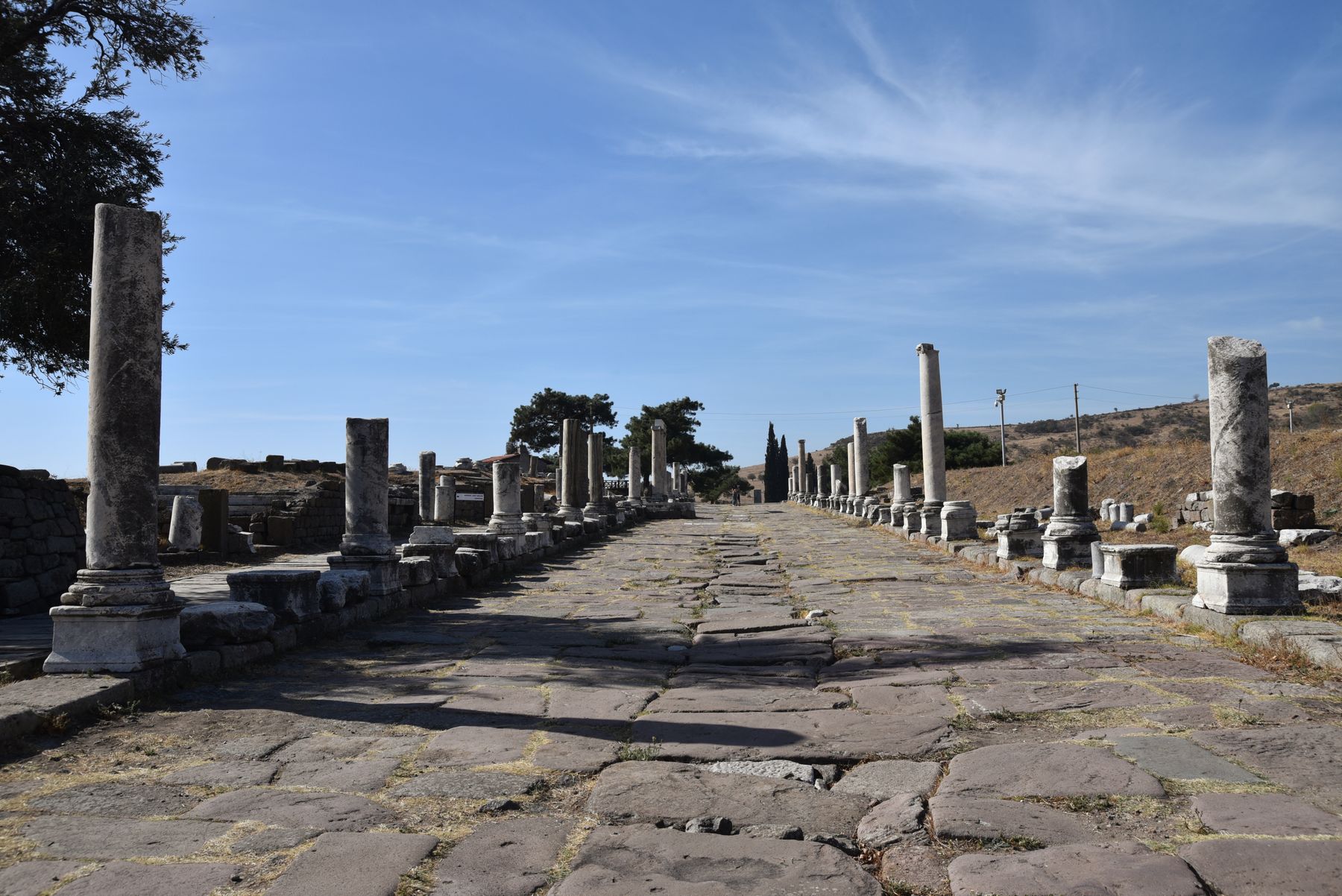
A serpent that saves. Set that beside the serpent in Revelation 12:9 and you can see the collision without having to force it.
This is the thread I am pulling on — the apocalypse read as a document written against a serpent healing cult — and it needs its own article, with the coins, the epithets and the inscriptions laid out properly. That one is coming. For now, note only this: the divine pharmacy John's readers knew was not an abstraction. It was an institution, up the hill from their houses, and it was working. People went there sick and came back well, and they gave the credit to a snake.
X. What This Actually Establishes
Because the point of doing this carefully is being able to say what you have and what you don't.
What the text establishes:
- Therapeutic cold-water immersion was prescribed, performed publicly, and documented in first-person detail in Roman Asia in the second century AD.
- The prescription came through incubation — an institutionalised dream-medicine practice with dedicated architecture, staff, and a community of interpretation.
- The first instruction in the regimen was to keep a written dream record. Documentation preceded treatment.
- The reported after-effect was a sustained, even thermal state and a non-hedonic, present-focused mental state lasting the rest of the day.
What it does not establish, and what you should push back on:
- Aristides is one patient, chronically ill, religiously committed, writing decades later from fragmentary notes, in a literary genre designed to glorify his god. He is a magnificent witness and a terrible sample size.
- An n = 1 retrospective account cannot demonstrate efficacy of anything. That his description is physiologically coherent is interesting. It is not evidence that the bath cured him.
- The modern literature is thin and mixed — see Cain et al. above. The honest summary is: robust acute catecholamine response, a real but delayed stress effect, an acute pro-inflammatory effect, and no demonstrated mood benefit versus control.
- Cold water immersion after resistance training attenuates anabolic signalling and blunts long-term gains in muscle mass and strength (Roberts et al., 2015). If you are training for hypertrophy, the plunge is working against you.
- Cold water can kill you. The cold shock response — an involuntary gasp, uncontrollable hyperventilation, a sharp rise in cardiac workload — is the leading cause of immersion deaths, and it can trigger arrhythmia in people with no idea they are at risk (Tipton et al., 2017). Aristides had a crowd of physicians standing on a bridge watching him. That was not vanity. That was a safety margin.
Do not do this alone. Do not do it in moving water. Do not do it if you have a cardiac history without talking to someone who knows your chart. The god in this story had a temple full of doctors on staff.
XI. The Signature
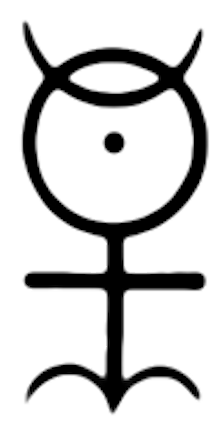
Saturn. Capricorn and Aquarius. Lead. Saturday. Cold and dry. The bones, the skin, the adrenals. Vata.
The old attribution for cold is Saturnine, and the old attributions are compressed observation. Saturn is the principle of limit — the boundary, the contraction, the thing that stops you. What did they see? A treatment that works by constriction: the vessels close, the surface withdraws, the body pulls its heat to the core and defends the centre against the edge. Saturn's season is the dead of winter. Saturn's gift, in the tradition, is never pleasure. It is structure — what remains when everything soft has been taken away.
Aristides, eighteen centuries before anyone measured a catecholamine, said it in one clause: not pleasure, nor anything you would call a human joy.
Something else. Something with an even power throughout.
As Homer put it, the grain-giving earth bears many drugs — many good in the mixture, and many baneful (Odyssey 4.229–230). A river in January is not a plant. But it was dispensed by the god of medicine, through sleep, to a man who wrote it down.
Go jump in some cold water. Take somebody with you. And write down what you dreamt.
Sources
Primary
- Aelius Aristides, Hieroi Logoi (The Sacred Tales), Orations 47–52. English translation: C. A. Behr, P. Aelius Aristides: The Complete Works, Vol. II (Leiden: Brill, 1981). The dream-journal injunction at Sacred Tales II (Behr, p. 291); the river command at II.18; the thanks for rhetorical power at Sacred Tales IV (Behr, p. 327).
- Behr, C. A. Aelius Aristides and the Sacred Tales. Amsterdam: Hakkert, 1968. archive.org
- Pausanias, Description of Greece 2.10.2 — the chamber of Hypnos at the Asclepieion of Sicyon, and Hypnos with Oneiros. Text
- Pliny the Elder, Natural History 29.5 (Antonius Musa and Augustus) and 29.10 (Charmis of Massilia; senes consulares usque in ostentationem rigentes). LacusCurtius
- Homer, Odyssey 19.547 (οὐκ ὄναρ, ἀλλ' ὕπαρ ἐσθλόν) and 4.229–230 (the φάρμακα of the grain-giving earth).
- Revelation 2:12–13; Acts 19:28, 34.
- Svoboda, A. The Seven Churches of Asia: with twenty full-page photographs, taken on the spot. London: Sampson Low, Son and Marston, 1869.
- Floyer, J. Psychrolousia, or, The History of Cold Bathing: Both Ancient and Modern. London, 1702. archive.org
Scholarship
- Downie, J. At the Limits of Art: A Literary Study of Aelius Aristides' Hieroi Logoi. Oxford University Press, 2013.
- Israelowich, I. Society, Medicine and Religion in the Sacred Tales of Aelius Aristides. Mnemosyne Supplements 341. Brill, 2012. BMCR review
- Tagliabue, A. "Aelius Aristides' Sacred Tales: A Study of the Creation of the 'Narrative about Asclepius'." Classical Antiquity 35.1 (2016): 126–160. Link
Cold water physiology
- Šrámek P, Šimečková M, Janský L, Šavlíková J, Vybíral S. "Human physiological responses to immersion into water of different temperatures." European Journal of Applied Physiology 2000;81(5):436–442. Link
- Buijze GA, Sierevelt IN, van der Heijden BCJM, Dijkgraaf MG, Frings-Dresen MHW. "The effect of cold showering on health and work: a randomized controlled trial." PLoS ONE 2016;11(9):e0161749. PMID 27631616. Link
- Cain T, et al. "Effects of cold-water immersion on health and wellbeing: a systematic review and meta-analysis." PLoS ONE 2025;20(1):e0317615. Link
- Roberts LA, Raastad T, Markworth JF, et al. "Post-exercise cold water immersion attenuates acute anabolic signalling and long-term adaptations in muscle to strength training." The Journal of Physiology 2015;593(18):4285–4301. PMID 26174323. Link
- Tipton MJ, Collier N, Massey H, Corbett J, Harper M. "Cold water immersion: kill or cure?" Experimental Physiology 2017;102(11):1335–1355. PMID 28833689. Link
Sleep onset, hypnagogia and dream incubation
- Lacaux C, Andrillon T, Bastoul C, Idir Y, Fonteix-Galet A, Arnulf I, Oudiette D. "Sleep onset is a creative sweet spot." Science Advances 2021;7(50):eabj5866. Link
- Haar Horowitz A, Cunningham TJ, Maes P, Stickgold R. "Dormio: a targeted dream incubation device." Consciousness and Cognition 2020;83:102938. PMID 32480292. Link
Evidence Backed Tradition. Nothing in this article is medical advice, and nothing here is intended to diagnose, treat, cure or prevent any disease. Cold water immersion carries real and documented risk of drowning and cardiac events. Speak to a clinician who knows your history before taking any of it up, and never plunge alone.




,_1st_-_2nd_century_AD,_copy_of_a_Hellenistic_original,_found_at_Civitella_d%27Arno_(near_Perugia,_Italy),_British_Museum,_London_(15700866386).jpg)

.jpg)
