Christianity's early centuries were full of rival interpretations of Jesus, scripture, creation, and salvation. Some teachers later classified as “Gnostic” wrote in Greek, while most of their books disappeared as complete Greek works. Their words survived in two very different ways: papyri excavated in Egypt and quotations preserved by later Christian critics. This reading guide brings those surviving Greek passages together, from second-century teachers to later manuscript witnesses.
Church writers argued fiercely against these movements and sometimes preserved the only quotations we have from them. Other works survived because Egypt's conditions kept papyrus intact. The Greek below gives unusually close access to early Christian debates, though a surviving copy is not an author's autograph, and a quotation by an opponent has passed through that opponent's hands. Many Nag Hammadi works survive in Coptic translation; this list focuses on places where Greek wording itself can still be read.
How to read the list: “Papyrus” means a separate ancient Greek manuscript survives. “Quoted” means the Greek survives inside Clement, Hippolytus, Origen, or Epiphanius. Some works, especially Thomas and Mary, are often studied alongside Gnostic literature although their classification is debated. These texts are not all equally early, and Greek literary transmission should not be confused with a recording of Jesus' own speech.
Nineteen places to read surviving Greek
Where to begin
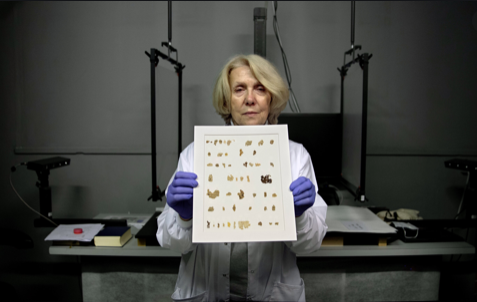
For the oldest Greek voices attributed to individual teachers, start with Basilides, Valentinus, Ptolemy, and Heracleon. For physical papyri, start with the three Greek fragments of Thomas and the two of Mary. Read each fragment beside its editor's notes: gaps, variant readings, and later quotation can change what a line can bear.
Source guide compiled for JD's Pharmacopeia. “Gnostic” is used as a broad reading label, not as a claim that all nineteen works came from one church or one doctrine.